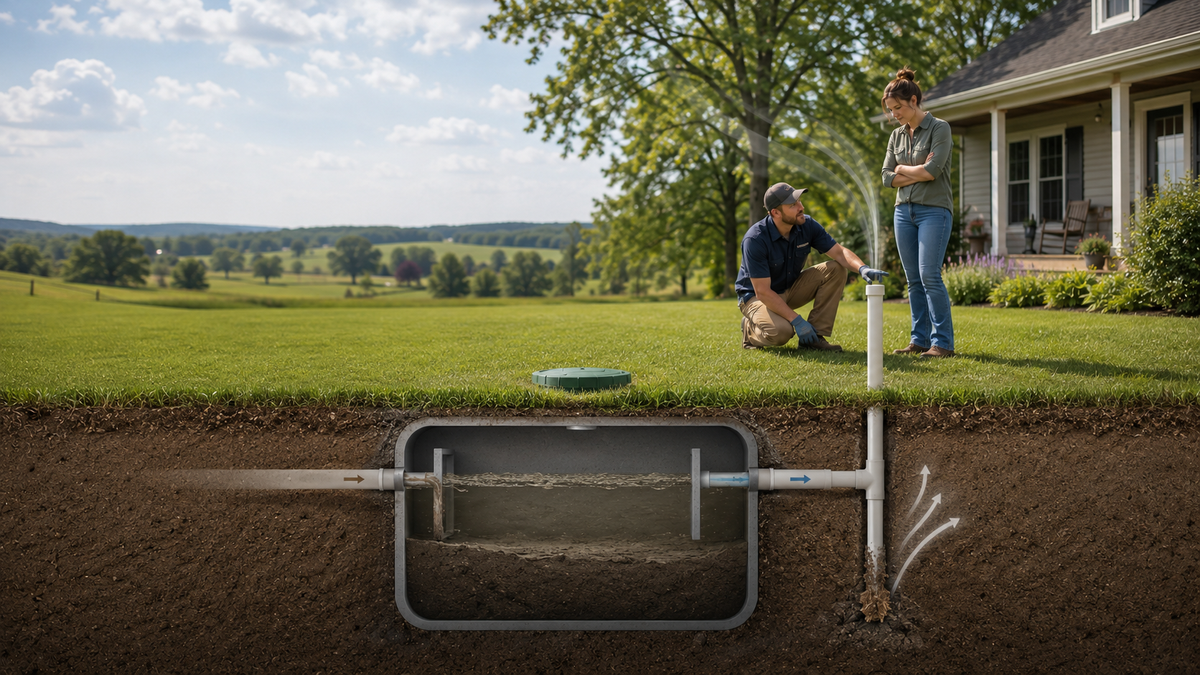
A septic tank often works quietly beneath the ground, making it easy to overlook until something goes wrong. Slow drainage, unpleasant smells and wastewater appearing near the drainage field may indicate that the system is no longer operating correctly. Arranging a professional septic tank inspection can help property owners understand the condition of their system, identify developing faults and plan any maintenance before the problem becomes more serious.
How does a septic tank work?
Septic tanks are commonly found at properties that are not connected to the mains sewer network. Wastewater flows into the tank, where solids settle at the bottom and lighter materials rise to the surface. The liquid between these layers leaves the tank and passes into a drainage field, where it is gradually absorbed into the surrounding soil.
The system needs adequate capacity, clear pipework and a functioning drainage field to work effectively. Waste must also be removed at suitable intervals to prevent excessive solids from accumulating. A fault in any part of the system can affect drainage throughout the property.
Why are inspections necessary?
A septic tank is mainly hidden underground, so its condition cannot always be judged by looking at the surrounding area. Cracks, damaged baffles, blocked outlet pipes and rising sludge levels may develop without producing an immediate warning.
An inspection provides a clearer picture of the tank, connected pipes and drainage field. Discovering a minor defect at an early stage can allow property owners to arrange a targeted repair rather than waiting for the system to fail.
Regular checks can also help establish whether the tank is suitable for the number of people using the property. A system that was installed many years ago may struggle if the property has since been extended or its occupancy has increased.
Warning signs that should not be ignored
Some septic tank problems remain hidden, but others begin to affect everyday drainage. Signs that a system may need attention include:
- Toilets, sinks or baths draining more slowly than usual
- Gurgling noises coming from pipes
- Persistent sewage smells inside or outside the property
- Wastewater backing up into toilets or drains
- Wet, boggy or unusually green patches near the drainage field
- Standing water close to the tank
- A septic tank that needs emptying more frequently than expected
These symptoms do not always reveal the exact cause. Slow drainage, for example, could be linked to a blockage, a full tank, damaged pipework or poor absorption within the drainage field. A professional assessment can help separate these possibilities and determine the next step.
What happens during a septic tank inspection?
The checks completed during an inspection will depend on the age, design, accessibility and condition of the system. The engineer will usually begin by locating the tank and examining its access points, lid and visible structure.
The inspection may include checks of:
- The walls and lid for signs of cracking or deterioration
- Inlet and outlet pipes for restricted flow or blockages
- Baffles and other tank components for damage or movement
- Sludge and wastewater levels
- Signs of leaks or groundwater entering the tank
- The condition of the ground surrounding the system
- The drainage field for pooling, odours or poor absorption
- The flow of wastewater away from the property
The findings can help establish whether the system is working normally or requires cleaning, emptying, repair or replacement. If another investigation is needed, the engineer should explain why and outline the available options.
How often should a septic tank be checked?
DASA recommends that septic tanks are professionally inspected at least once every three years. Some systems may require more frequent attention depending on their age, condition and level of use.
A larger household may place greater demand on a tank than a property occupied by one or two people. Older tanks can also benefit from closer monitoring, particularly when there is limited information about previous repairs or maintenance.
An inspection should not replace routine emptying. The two services perform different roles. Emptying removes accumulated waste, while an inspection assesses the condition and operation of the wider system. Keeping records of both can make it easier to monitor changes and demonstrate that the tank has been maintained responsibly.
Septic tank inspections when buying a property
Anyone considering buying a home with a septic tank should seek clear information about the system before completing the purchase. The tank, pipework or drainage field could require work that is not apparent during a standard property viewing.
Buyers should ask when the tank was installed, how regularly it has been emptied and whether it has previously needed repairs. They should also confirm where the tank and drainage field are located, as this may affect future building or landscaping plans.
A professional survey can provide more reliable information about the system’s current condition. If defects are found, the buyer can investigate likely repair costs and discuss them before committing to the purchase.
Problems caused by delayed maintenance
Leaving a septic tank unchecked can allow small defects to become harder and more expensive to resolve. Excessive sludge can enter the outlet and reduce the effectiveness of the drainage field. Cracks may allow wastewater to escape or groundwater to enter the tank, while damaged pipework can restrict flow and cause waste to back up towards the house.
A failing drainage field can be particularly disruptive. Once the surrounding ground can no longer absorb wastewater effectively, repairs may involve more than emptying or cleaning the tank. Regular inspections reduce uncertainty and give property owners more time to act when deterioration is detected.
Preparing for an inspection
Property owners can help the visit run smoothly by making the tank’s access point easy to reach. Gates should be unlocked, vehicles moved if necessary and vegetation cleared away from the lid without disturbing the system.
Any available maintenance records should be kept ready for the engineer. It can also help to note recent symptoms, including where smells have appeared, which drains are slow and when the tank was last emptied. There is usually no need to empty the tank before the inspection, as its current waste and sludge levels may provide useful information.
Professional inspections give property owners a clearer understanding of their septic system and the work needed to keep it functioning. With more than 40 years of drainage experience, DASA provides septic tank surveys alongside cleaning, repairs, replacement and other specialist drainage services for residential and commercial properties across the UK.
About the Author