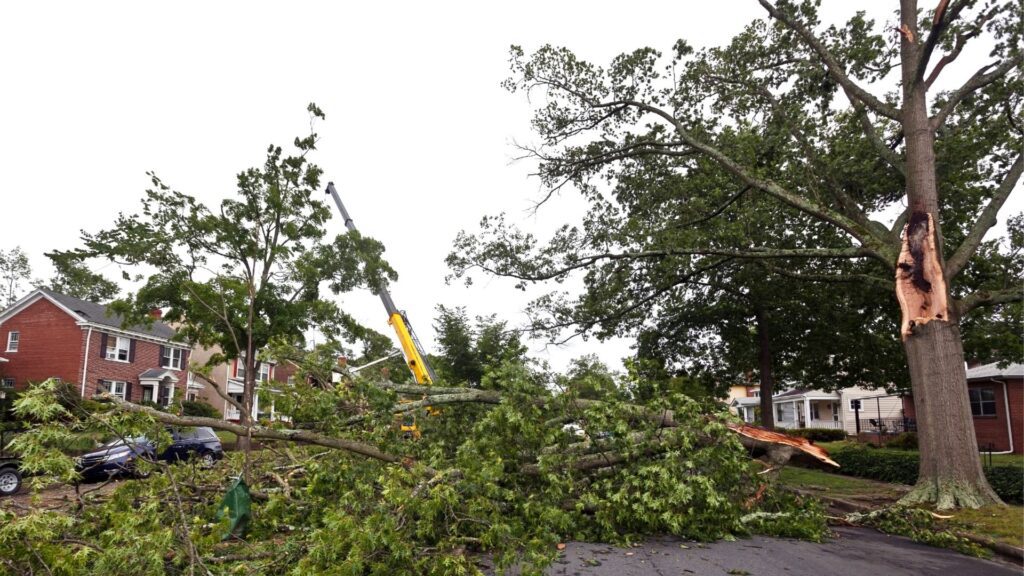
A tree that survives a severe storm without falling can still pose a massive safety risk to your home and property. While snapped trunks and completely uprooted root systems are instantly recognizable, the most dangerous structural failures are often invisible from a distance. High winds, heavy rain, and lightning leave behind internal fractures and structural weaknesses that slowly degrade the stability of the tree over time. Left unaddressed, a compromised tree can fail unexpectedly weeks or months after the weather has cleared. Learning to spot these hidden indicators allows you to intervene early, preventing property damage and potentially saving a valuable landscape asset.
Scanning the Upper Canopy for Hanging Hazards
The highest branches of a tree bear the brunt of extreme wind speeds, making the upper canopy the prime location for initial structural failures. Look closely for detached branches that are caught or hanging in the upper limbs. These loose branches, often called widow makers, can dislodge during a light breeze or a heavy rainfall, falling unexpectedly onto anyone walking below.
Inspect the ends of the branches for tearing or splintering where they meet the main limbs. Leaves may temporarily obscure these fractures, so you need to look at the canopy from multiple angles using binoculars. If you notice a specific section of the canopy turning brown or losing leaves prematurely while the rest of the tree remains green, it indicates that the internal vascular system of that branch has been severed by storm twist, cutting off its water supply.
Recognizing Truncal Cracks and Internal Splitting
High winds force a tree trunk to bend and flex, creating immense internal pressure. When the mechanical limits of the wood are exceeded, the trunk will develop stress fractures that may not be apparent at a casual glance. Examine the main trunk for vertical deep cracks that penetrate through the outer bark and into the wood beneath.
Pay close attention to co-dominant stems, which are situations where a trunk splits into two equal-sized main branches forming a tight V-shape. These connection points are inherently weak and highly susceptible to splitting during a storm. If you notice a fine line of fluid or sap oozing from a crotch connection, or if you can see daylight through the split, the structural integrity of the tree is severely compromised, requiring immediate stabilization or removal. When assessing your property after a severe storm, knowing how to identify hidden storm damage in trees such as internal trunk fractures or precarious, hanging branches can help you decide when it is time to call an emergency tree service before a dangerous failure occurs.
Evaluating Lightning Strikes and Bark Separation
Lightning strikes do not always cause a dramatic explosion or catch the tree on fire. Often, a strike manifests as a subtle, continuous strip of missing bark running straight down the side of the trunk from the upper branches to the soil line. Examine the trunk for areas where the bark looks intact but appears slightly blistered, charred, or dimpled. Tap these areas gently with a rubber mallet; a hollow sound indicates that the bark has separated from the wood underneath, destroying the cambium layer that transports nutrients. Even if the tree survives the initial strike, these dead zones create an open invitation for wood-boring insects and fungal decay organisms to enter the core of the tree.
Conclusion
Identifying storm damage in your trees requires a methodical inspection that goes far beyond checking for fallen limbs. By scanning the upper canopy for hangers, checking co-dominant stems for fractures, looking for root plate heave, and checking for bark separation, you can detect structural weaknesses before they turn into disasters. Trees are resilient organisms, and many types of hidden damage can be mitigated through professional pruning, cabling, or soil aeration if caught early enough. Taking the time to evaluate your landscape after severe weather protects your home, maintains the value of your property, and ensures that your mature trees remain safe and stable features of your environment.
About the Author